
Ramen vs. Ramyeon(Ramyun): What's the Difference?
September 26, 2026
If you've ever walked through an Asian grocery store, you may have wondered why some noodles are called ramen while others are called ramyeon (ramyun).
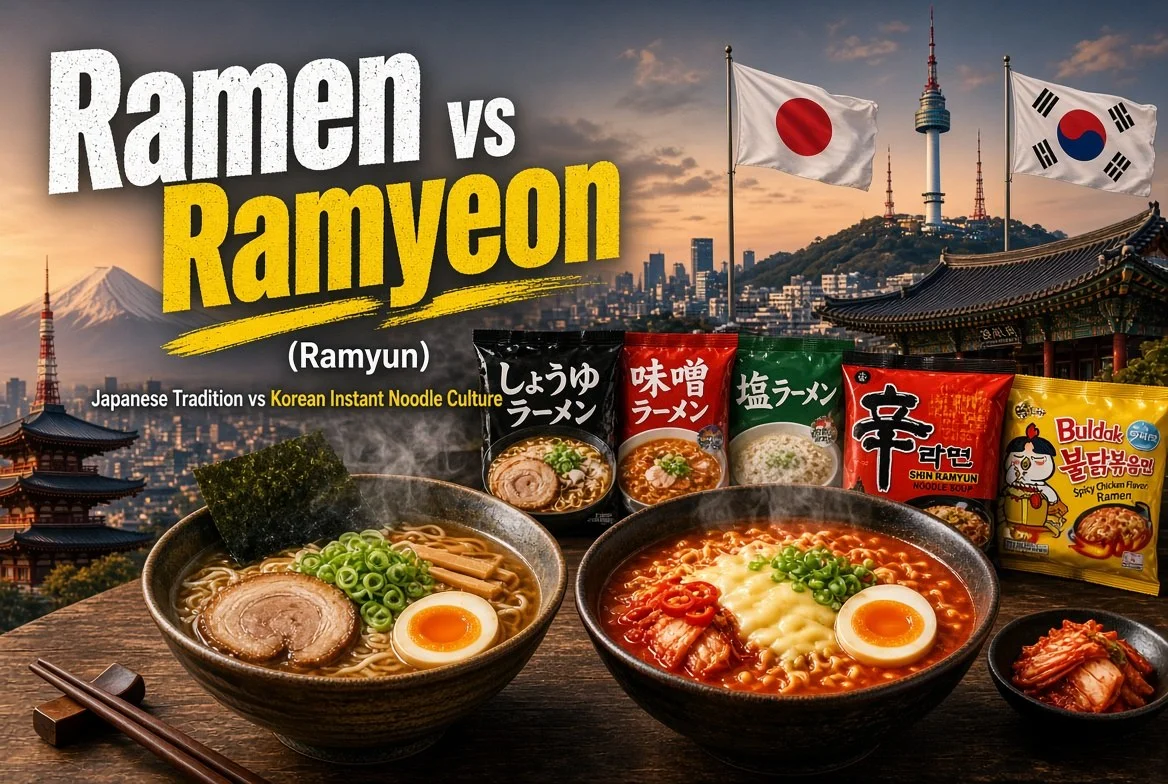
If you've ever walked through an Asian grocery store, you may have wondered why some noodles are called ramen while others are called ramyeon (ramyun).
Are they the same thing?
Not quite.
The two words are closely related, but today they usually refer to different culinary traditions.
Ramen Is Japanese. Ramyeon(Ramyun) Is Korean.
Ramen (ラーメン) is the Japanese term for a noodle dish that developed from Chinese-style wheat noodles and became a major part of Japanese food culture.
Ramyeon(Ramyun) (라면) is the Korean term. In English, you will also see it written as ramyeon(ramyun), particularly in product names such as Shin Ramyun or Samyang Ramyeon.
The easiest way to remember the distinction is:
Ramen is the Japanese term. Ramyeon or ramyun is the Korean term.
But the difference goes beyond spelling.
What Does "Ramen" Usually Mean?
In Japan, ramen can refer to both restaurant ramen and instant noodles.
Restaurant ramen comes in many styles, including:
- Shoyu — soy-sauce based
- Shio — salt-based
- Miso — fermented soybean paste
- Tonkotsu — rich pork-bone broth
The noodles, broth, toppings, and preparation can vary significantly by region and restaurant.
Ramen is therefore best understood as a broad Japanese noodle-food tradition, rather than a single type of noodle.
What Does "Ramyeon" Usually Mean?
In Korea, ramyeon usually refers to instant noodles.
Korean instant noodles became a major food category after Samyang introduced Korea's first commercially produced instant noodle in 1963.
Over the decades, Korean manufacturers developed a style of instant noodle known for:
- Bold seasoning
- Strong savory flavors
- Chili heat
- Chewy noodles
- Convenient preparation
- Extensive customization
Today, ramyeon(ramyun) is deeply embedded in everyday Korean food culture.
For a closer look at the Korean market, see our Korea's Top 10 Ramyeon Brands in 2025: What the Data Really Tells Us.
The Flavor Difference
The distinction becomes even clearer when you taste them.
Japanese ramen often places strong emphasis on the relationship between the broth, noodles, and toppings.
Korean ramyeon tends to deliver a more immediate, concentrated flavor experience.
A typical Korean ramyeon may feature:
Chili + garlic + beef or seafood + savory seasoning + chewy noodles
This doesn't mean Japanese ramen is mild or Korean ramyeon is always spicy. Both categories contain enormous variety.
Rather, their dominant food traditions evolved differently.
Fresh Ramen vs. Instant Ramyeon
This is probably the biggest practical difference for someone new to the terminology.
A bowl of Japanese ramen is often associated with a ramen restaurant, where noodles and broth are prepared specifically for the dish.
A packet of Korean ramyeon is generally designed for quick preparation at home, in a dorm, at a convenience store, or late at night.
And Korean ramyeon is often customized.
People commonly add:
- Eggs
- Kimchi
- Green onions
- Cheese
- Dumplings
- Spam
- Rice cakes
The packaged noodle is often just the starting point.
So Is Korean Ramyun Just Korean Ramen?
No.
The two foods share historical and culinary connections, but Korean ramyeon has developed its own identity.
Japanese ramen evolved into a diverse restaurant and noodle tradition with highly specialized regional styles.
Korean ramyeon evolved into a powerful instant-noodle culture centered around convenience, bold flavors, spicy seasoning, and customization.
And neither category is completely exclusive.
Japan has a huge instant-ramen industry, while Korea also has restaurant dishes influenced by ramen and other noodle traditions.
Ramen vs. Ramyun at a Glance
| Japanese Ramen | Korean Ramyun | |
|---|---|---|
| Native term | ラーメン | 라면 |
| Common English term | Ramen | Ramyeon / Ramyun |
| Most common association | Restaurant & instant noodles | Instant noodles |
| Flavor | Highly varied | Often bold and spicy |
| Preparation | Fresh or packaged | Primarily packaged |
| Food culture | Ramen shops & regional styles | Home cooking & convenience |
| Customization | Toppings & broth choices | Eggs, kimchi, cheese, etc. |
The Bottom Line
Ramen and ramyeon are related, but they are not simply two spellings of the same food.
Ramen is the Japanese culinary tradition.
Ramyeon is the Korean instant-noodle tradition.
Once you understand that distinction, the enormous variety of noodles across Japan and Korea becomes much easier to explore.
And that's where the fun begins: different countries, different ingredients, different flavors—and a lot of noodles.
Explore More
Korea's Top 10 Ramyeon Brands in 2025: What the Data Really Tells Us
More NoodleIndex articles coming soon:
-
What Is Ramen?
-
What Is Ramyeon?
-
Ramen vs. Instant Noodles
-
Japanese Ramen vs. Korean Ramyeon
-
Why Is Korean Ramyeon So Spicy?