
What Makes Japanese Ramen Different?
October 5, 2026
A closer look at the broth, tare, noodles, toppings, and regional styles behind Japan's restaurant ramen. When people hear the word ramen, they may picture a simple bowl of…
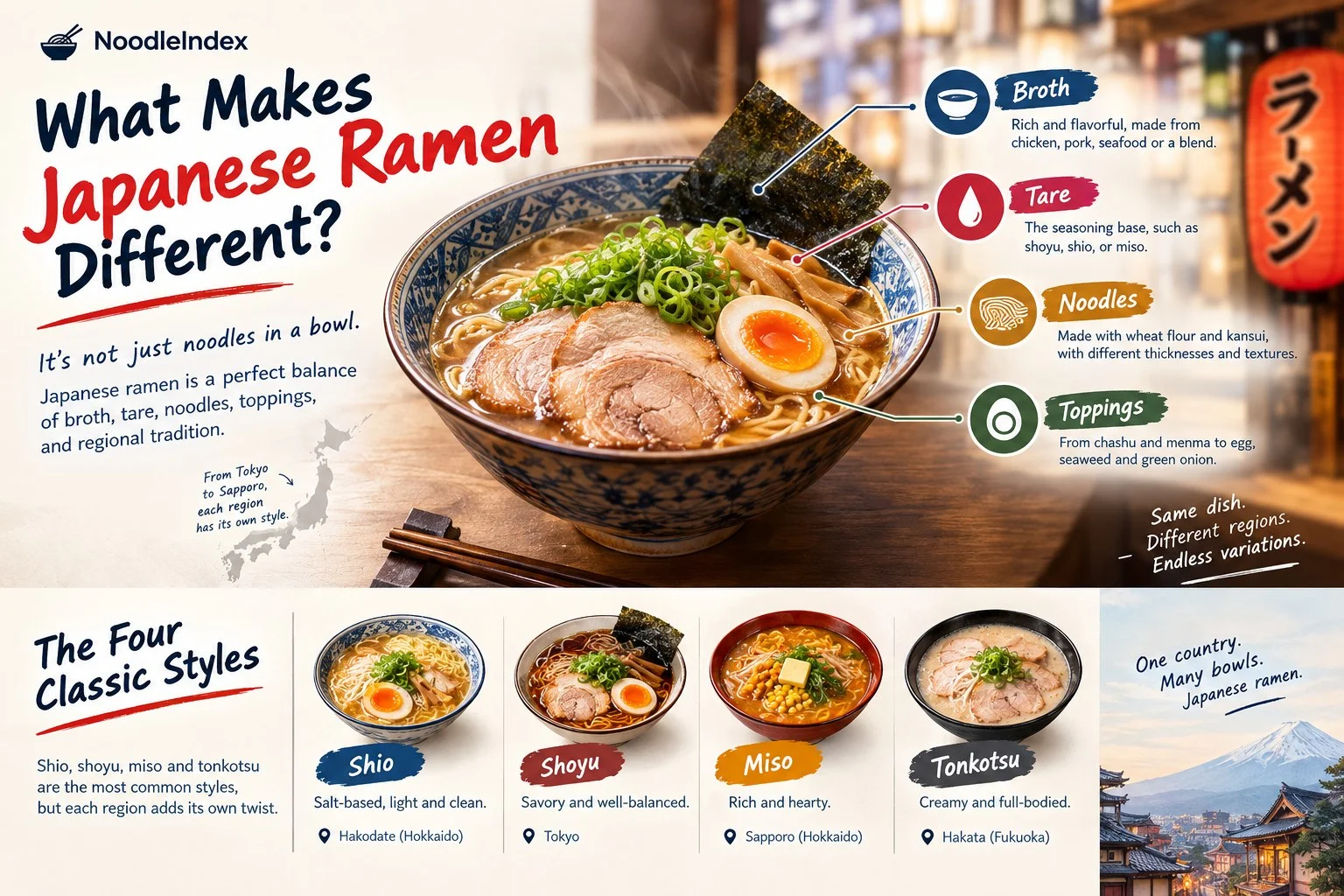
A closer look at the broth, tare, noodles, toppings, and regional styles
behind Japan's restaurant ramen.
When people hear the word ramen, they may picture a simple
bowl of noodles in a hot broth.
But in Japan, restaurant ramen is much more than that.
A bowl served at a ramen shop is the result of several elements working together: broth, tare, noodles, toppings, and cooking technique. Because each shop can combine these elements differently, two bowls of ramen can taste completely different even when they come from the same city.
Japanese ramen is also highly regional. Sapporo is known for miso ramen, Tokyo for shoyu-based styles, and Fukuoka for tonkotsu. But these are starting points rather than strict rules. Almost every region has developed its own variations.
Japan National Tourism Organization — Ramen Guide
1. The Broth Is Only the Beginning
One of the most important parts of Japanese ramen is the soup.
Four styles are commonly used when describing Japanese ramen:
shio, shoyu, miso, and tonkotsu.
Shio Ramen
Shio means salt.
Shio ramen is generally seasoned with salt-based tare, allowing the
underlying broth and other ingredients to remain relatively prominent.
Hakodate in Hokkaido is particularly associated with shio ramen.
Shoyu Ramen
Shoyu means soy sauce.
Shoyu ramen is traditionally associated with Tokyo and often combines
soy sauce seasoning with chicken, pork, fish, or dashi-based stocks.
The result can range from light and clear to darker and more intensely
flavored.
Miso Ramen
Miso ramen is strongly associated with Sapporo.
It became particularly popular in Hokkaido and is often served with thicker, wavy noodles and hearty toppings. Corn and butter are also commonly associated with Sapporo-style ramen.
Tonkotsu Ramen
Tonkotsu is different from the other three.
Rather than describing the seasoning, the name refers to the broth itself:
pork-bone stock.
The bones are typically boiled for extended periods, producing the
characteristic cloudy and rich broth associated with Hakata and other
Kyushu ramen styles.
This distinction is important.
Japanese ramen isn't simply divided into four completely separate
categories. A bowl can combine a particular stock with a particular
seasoning.
That is why ramen becomes much more interesting when you look beyond
the name of the broth.
JNTO — A Guide to Ramen in Japan
2. Tare Gives Ramen Its Character
A ramen shop doesn't simply make a pot of soup and add noodles.
The seasoning component, often called tare, plays a major role in defining the final flavor.
Shoyu, shio, and miso can all function as the seasoning foundation, while the underlying broth may be made from chicken, pork, fish, seafood, or combinations of different ingredients.
The balance between broth and tare can dramatically change the character
of a bowl.
A chicken-based broth with a delicate shio tare can feel light and clean.
A rich pork broth with a strong shoyu tare can feel much deeper and more
savory.
This is one reason why two ramen shops offering "shoyu ramen" may serve bowls that taste completely different.
3. Noodles Matter More Than You Might Think
The noodles are another defining element.
Ramen noodles are typically made with wheat flour and kansui, an alkaline solution that gives them their characteristic firmness and springy texture.
But there is no single standard ramen noodle.
- Thickness
- Shape
- Length
- Firmness
- Straight or wavy texture
Hakata ramen, for example, is known for its thin noodles, while Sapporo ramen commonly uses thicker, wavy noodles. Kitakata ramen is also known for its relatively thick and curly noodles.
Some Hakata ramen shops even allow customers to choose how firm they want their noodles.
And if you finish your noodles while plenty of broth remains, you may be able to order kaedama, an additional serving of noodles.
4. Toppings Complete the Bowl
The toppings are not simply decoration.
Common ingredients include:
- Chashu — braised or roasted pork
- Menma — seasoned bamboo shoots
- Negi — Japanese green onion
- Nori — dried seaweed
- Ajitama — seasoned soft-boiled egg
Regional and shop-specific variations are endless.
Tokyo-style ramen, for example, commonly features chashu, menma, scallions, and nori. Hakata ramen tends to use simpler toppings that allow the rich tonkotsu broth and thin noodles to remain central.
5. Ramen Is Highly Regional
Perhaps the most interesting characteristic of Japanese restaurant ramen is regional diversity.
Travel across Japan and the style of ramen can change dramatically.
Tokyo
Shoyu Ramen
Soy sauce-based seasoning with chicken, pork, vegetable, or dashi-based stocks.
Sapporo
Miso Ramen
Rich miso flavor, often paired with thicker wavy noodles and hearty toppings.
Hakata, Fukuoka
Tonkotsu Ramen
Cloudy pork-bone broth with thin noodles and relatively simple toppings.
Hakodate
Shio Ramen
A salt-seasoned style known for a lighter broth.
Kitakata
Kitakata Ramen
Known for relatively thick, curly noodles and a shoyu-based style.
These regional identities are part of what makes eating ramen in Japan different from simply ordering "ramen."
JNTO — A Quick Guide to Japanese Noodles
6. The Ramen Shop Is Part of the Experience
Japanese ramen is also closely connected to the way it is served.
Many ramen shops are small, casual restaurants designed for a relatively quick meal.
Some shops use ticket vending machines at the entrance. Customers select their ramen and toppings, pay first, and hand the ticket to the staff.
Menus can also be surprisingly focused.
Rather than offering dozens of unrelated dishes, a shop may specialize in one or two main ramen styles and offer variations through different toppings or noodle choices.
This allows the restaurant to focus heavily on one particular bowl.
And at popular shops, the line outside the restaurant can be part of the experience itself.
Restaurant Ramen vs. Instant Ramen
This distinction is important when talking about Japanese ramen.
Instant Ramen
Designed for convenience, consistency, and easy preparation.
Restaurant Ramen
Built around broth, tare, noodle texture, toppings, cooking technique, and the chef's individual approach.
A ramen chef can control the broth, tare, aroma, noodle texture, cooking time, toppings, and final assembly.
That is why restaurant ramen is better understood as a dish with multiple components, rather than simply a type of noodle soup.
So, What Makes Japanese Ramen Special?
There isn't one ingredient that defines Japanese ramen.
Its character comes from the relationship between:
Broth + Tare + Noodles + Toppings + Regional Style + Chef's TechniqueThat combination is what allows a simple bowl of noodles to become something highly individual.
A bowl of Sapporo miso ramen, Tokyo shoyu ramen, and Hakata tonkotsu ramen may all be called "ramen"—but the experience of eating them can be completely different.
And that's the beauty of Japanese ramen.
There isn't just one Japanese ramen. There are thousands of interpretations.
Explore More on NoodleIndex
- Ramen vs. Ramyeon(Ramyun): What's the Difference?
- The History of Korean Spicy Ramyeon
- Japanese Ramen by Region — Coming soon
- Shoyu vs. Miso vs. Shio vs. Tonkotsu — Coming soon
Sources
-
Japan National Tourism Organization (JNTO)
Ramen — Official guide to ramen styles, regional varieties, restaurant culture, and how ramen is served.
Japan Travel — Ramen -
Japan National Tourism Organization (JNTO)
A Guide to Ramen in Japan — Background on ramen's development, broth styles, regional differences, noodles, and toppings.
Japan Travel — A Guide to Ramen in Japan -
Japan National Tourism Organization (JNTO)
Ramen 101 — Background on tonkotsu ramen, Hakata ramen, noodle styles, and regional development.
Japan Travel — Ramen 101 -
Japan National Tourism Organization (JNTO)
A Quick Guide to Japanese Delicacies: Noodles — Overview of shio, shoyu, miso, tonkotsu, tsukemen, and regional ramen styles.
Japan Travel — Japanese Noodles