The History of Korean Spicy Ramyeon
October 2, 2026
The History of Korean Spicy Ramyeon From Samyang Ramyeon to Buldak, how spicy ramyeon became a defining part of Korean food culture. When people think about Korean instant…
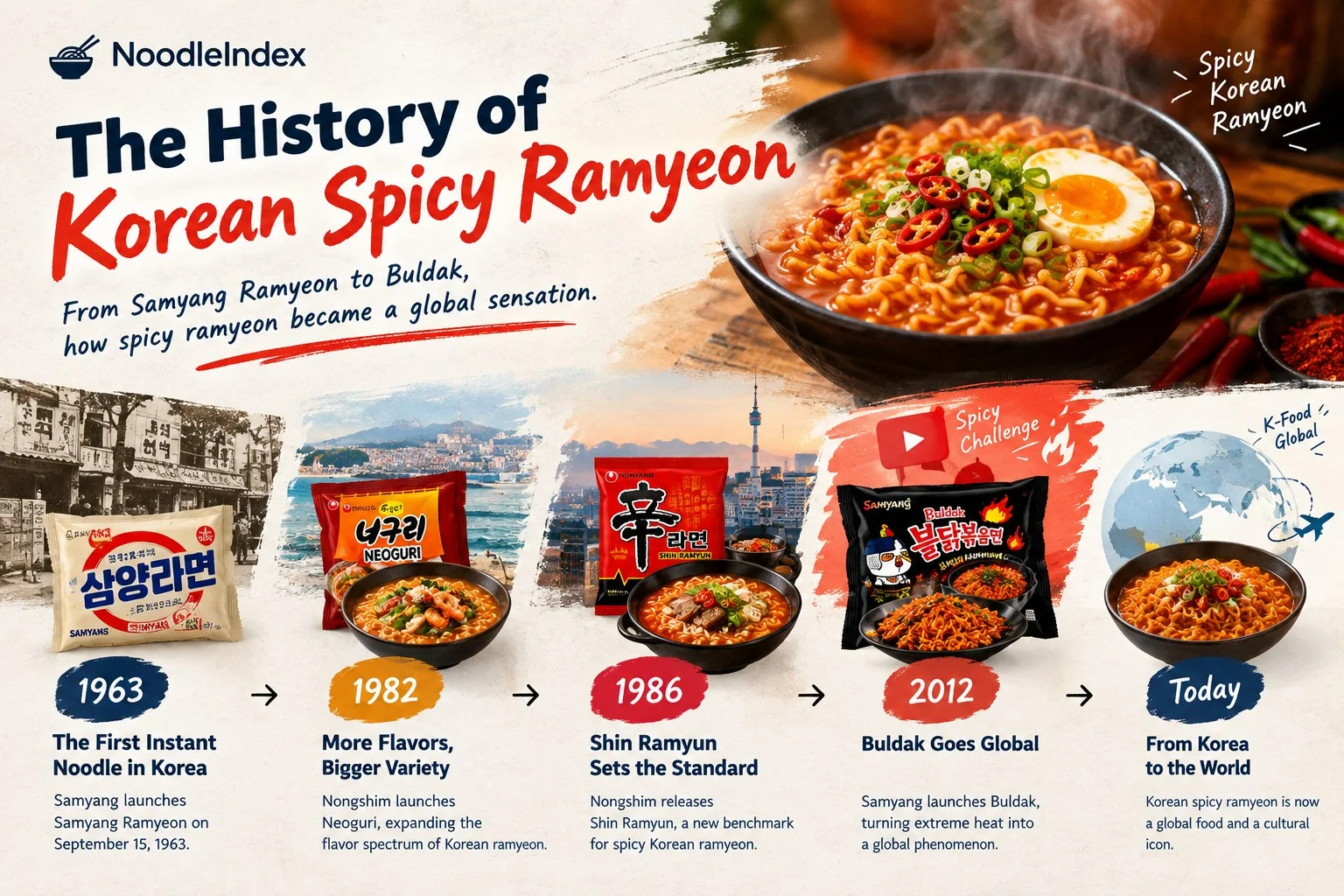
From Samyang Ramyeon to Buldak, how spicy ramyeon became a defining part of Korean food culture.
When people think about Korean instant noodles, one characteristic often comes to mind first:
spicy.
From Shin Ramyun to Buldak, Korean ramyeon has developed a reputation for bold heat.
But Korea's instant-noodle story did not begin with extreme spice.
The history of Korean spicy ramyeon is a story of changing tastes, new products,
and eventually a global food phenomenon.
1963: Where Korean Ramyeon Began
Korea's instant-noodle industry began on
September 15, 1963, when Samyang introduced the country's first ramyeon.
At the time, South Korea was still dealing with food shortages following the Korean War.
Rice, the country's staple food, was in short supply, and inexpensive foods were particularly important.
Samyang's founder, Chun Joong-yoon, introduced instant-noodle manufacturing technology
from Japan and began producing Samyang Ramyeon.
Yonhap describes the early Korean product as an inexpensive, oil-fried noodle served
with soup powder and dried ingredients.
Read more at Yonhap News Agency
Samyang's own company history also identifies September 1963 as the beginning
of Korea's instant-noodle industry.
Samyang Foods — Company History
At this point, ramyeon was primarily about
affordability, convenience, and food security—not extreme heat.
The 1980s: Spicy Ramyeon Takes Shape
During the 1980s, Korea's instant-noodle market was expanding rapidly,
and manufacturers began developing more distinctive flavors.
Nongshim introduced several products during this period, including
Neoguri in 1982 and Shin Ramyun in 1986.
Nongshim — Company History
Shin Ramyun became particularly important.
Launched in October 1986, it combined a strong spicy flavor
with a savory broth and became one of the defining products of Korean ramyeon.
This was an important shift.
Spiciness was no longer simply an ingredient in Korean ramyeon. It was becoming part of the identity of a product.
Shin Ramyun and the Rise of Spicy Korean Ramyeon
Shin Ramyun helped establish a flavor combination that many consumers now associate
with Korean instant noodles:
chili heat + savory broth + umami + chewy noodles.
Other products followed different paths.
Neoguri combined spicy seasoning with a seafood-oriented flavor profile,
while other Korean noodles explored kimchi, jjampong, black-bean sauce,
and other distinctly Korean or Korean-inspired flavors.
The result was not one single "Korean spicy flavor," but a growing spectrum
of spicy ramyeon.
2012: Buldak Changes the Game
Then came Buldak.
Samyang launched Buldak Ramen in April 2012.
The company's official product information describes it as a spicy fried instant
noodle with sesame seeds and grilled seaweed flakes.
Samyang Foods — Buldak Ramen
Buldak approached heat differently from traditional soup-based ramyeon.
Instead of relying primarily on a spicy broth, the noodles are coated
with a concentrated sauce.
That made the spiciness itself part of the experience.
According to Samyang's sustainability report, the original Buldak is listed
at 4,404 Scoville Heat Units (SHU).
The company also describes the development of Buldak and its later association
with the "Buldak Challenge."
Samyang Foods — Sustainability Report
From Spicy Noodles to Global Food Culture
Buldak's success helped take Korean spicy ramyeon beyond the grocery aisle.
Videos of people attempting increasingly spicy noodles became popular on
YouTube and other social platforms. The product was no longer simply something
to eat—it became something to experience and share.
Samyang reports that the Buldak brand had surpassed
5.7 billion cumulative units sold across more than 100 countries
by the end of 2023.
This transformation is an important part of the modern history of Korean ramyeon:
1963
Samyang launches Korea's first instant noodle.
↓
1982
Nongshim launches Neoguri.
↓
1986
Shin Ramyun introduces a new benchmark for spicy Korean ramyeon.
↓
2012
Buldak turns extreme heat into a product identity.
↓
2010s~2020s
Korean spicy noodles become a global food and social-media phenomenon.
A Few Milestones in Spicy Korean Ramyeon
🌶️ Shin Ramyun
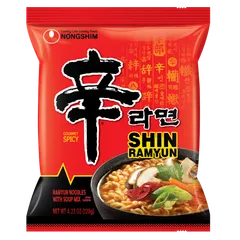
Nongshim · 1986
A landmark spicy soup noodle combining chili heat with a savory broth.
🌶️🌶️ Neoguri Spicy
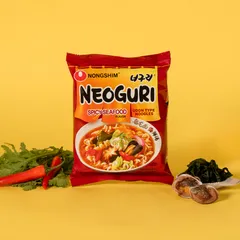
Nongshim · 1982
A thicker noodle with a spicy seafood-oriented flavor profile.
🌶️🌶️🌶️ Buldak Original
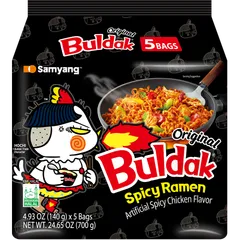
Samyang · 2012
A spicy stir-fried noodle built around a concentrated sauce rather than
a traditional soup.
🔥 Buldak 2X Spicy
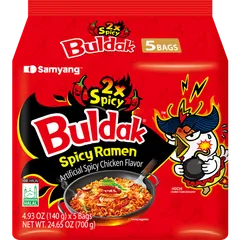
Samyang
A more extreme expression of the Buldak concept, extending the brand's
focus on heat.
The Story Is Still Developing
Korean spicy ramyeon has changed dramatically in just six decades.
What began in 1963 as an inexpensive convenience food eventually developed
into a huge variety of flavors and heat levels—and some products became
global cultural icons.
The interesting part is that
"spicy Korean ramyeon" is not one flavor.
It can mean spicy beef broth, spicy seafood, kimchi, hot chicken,
chili and garlic, or an intentionally extreme level of heat.
And that's what makes Korean ramyeon worth exploring beyond a simple question
of "How spicy is it?"
The better question may be:
What kind of spicy do you like?
Explore More on NoodleIndex
Sources
-
Yonhap News Agency
60 yrs of ramyeon: from hunger food to S. Korea's key export item — September 14, 2023.
Read the Yonhap article -
Samyang Foods
Official Company History.
Samyang Foods — Company History -
Nongshim
Official Company History.
Nongshim — Company History -
Samyang Foods
Official Buldak Product Information.
Samyang Foods — Buldak Ramen -
Samyang Foods
2023 Sustainability Report.
Samyang Foods — Sustainability Report